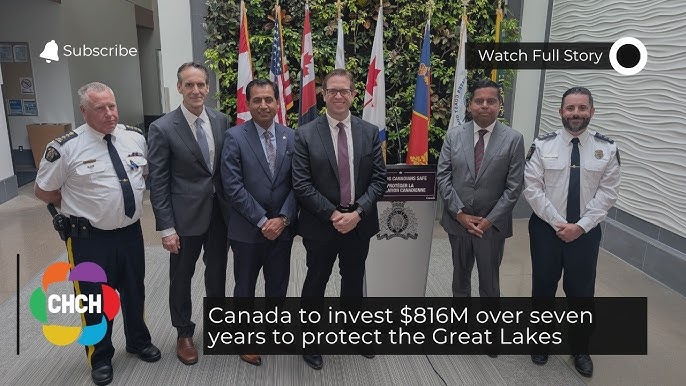

Canada’s Bold Investment in Maritime Security: A New Era for Our Waters
The recent $816 million investment over seven years by Canada marks a turning point in safeguarding its waterways. In an effort to bolster maritime security across the Great Lakes and the St. Lawrence region, the government is repositioning the Canadian Coast Guard’s role from solely managing search and rescue or icebreaking to a multifaceted security operation. This article takes a closer look at how these developments, though full of tricky parts and subtle details, could reshape the nation’s maritime domain for the better.
This new chapter is not without its challenges. When we get into projects of this scale, there are always a few tangled issues that can seem a bit intimidating at first glance. Yet, the benefit of enhanced situational awareness and multipartner collaboration really outweighs any small obstacles that may emerge. With a fresh infusion of funding and a mandate that extends well beyond traditional functions, the Canadian Coast Guard is poised to make a significant difference in how Canada manages its coastal safety and maritime interests.
Strengthening Great Lakes Maritime Security
The transformation begins in the Great Lakes region—a critical area for both economic vitality and national security. The introduction of a 24/7 Marine Security Operations Centre in Niagara is a central element of the strategy. This facility is designed to deliver constant monitoring and real-time data integration, helping agencies figure a path through the confusing bits of modern maritime threats. By using advanced technology and a network of connected systems, the new centre promises to provide up-to-date situational awareness, ensuring that any unusual activity is swiftly identified and effectively addressed.
Key initiatives in the region include:
- Establishing a dedicated operations centre to integrate live data and intelligence.
- Deploying up to 11 radar sites to cover existing gaps in surveillance.
- Employing autonomous systems, such as drones equipped with state-of-the-art sensors and cameras.
These measures, while loaded with a few nerve-racking twists and turns, are viewed as essential for maintaining the security and economic sustainability of the region. They also provide reassurance that every move along these strategic waterways is monitored with the highest level of detail possible.
Enhancing Situational Awareness in Canada’s Waters
The new investment focuses significantly on amplifying Canada’s capabilities to monitor its vast and diverse waterways. One of the standout features in this strategy is the integration of advanced autonomous systems, which include both drones and subsurface platforms. These tools are not only modern but also critical in expanding operational reach from both land and sea.
Autonomous systems offer several benefits:
- Extended Reach: They allow the Coast Guard to monitor remote areas that were previously hard to reach.
- Reduced Operational Risks: By using drones and uncrewed vehicles, personnel exposure to dangerous situations is minimized.
- Real-Time Data Sharing: Equipped with sophisticated sensors and high-definition cameras, these platforms enable the rapid sharing of actionable intelligence.
While many may find the idea of relying on these technologies a bit overwhelming or even slightly off-putting, the transition is a necessary evolution in light of modern maritime challenges. The integration of these systems is not only about keeping tabs on sea activity; it’s a stride towards making sure that every subtle detail—every little twist in marine movement—is recorded and understood.
Collaborative Efforts and Intelligence Sharing: A Unified Front
One of the most critical aspects of the new maritime security initiative is the emphasis on collaboration. Witnessing a robust partnership between the Canadian Coast Guard, the Department of National Defence, the Canadian Armed Forces, the Royal Canadian Mounted Police, and other key agencies underlines the commitment to a unified approach. Strong, coordinated collaborations help steer through those confusing bits of inter-agency communication and ensure that everyone is on the same page when it comes to safeguarding Canada’s waters.
Key elements of this cooperative approach include:
- Integrated Intelligence: Advanced camera systems on Coast Guard ships and helicopters will provide detailed imagery that can be shared with defence and law enforcement partners.
- Real-Time Communication: The new systems offer immediate data sharing that is critical for making quick, informed decisions.
- Unified Operations: A joint effort that spans various departments ensures that every small distinction in potential threats is noticed and tackled together.
This partnership not only strengthens overall security but also enhances our nation’s readiness to respond to unanticipated challenges. When different agencies work hand in hand, even the fine points and hidden complexities of maritime security become more manageable. It is a clear indication that, despite the occasional intimidating twist, a coordinated effort can demystify the nerve-racking aspects of modern defence operations.
Modernizing the Canadian Coast Guard: Expanded Roles and New Capabilities
The Canadian Coast Guard is undergoing a significant makeover. Originally responsible for search and rescue, environmental protection, and maintaining safe waterways, the agency now shoulders the additional duty of maritime security. This shift is supported by legislative changes such as the Strengthening Canada’s Immigration Systems and Borders Act. The Act not only reflects new mandates but also paves the way for the Coast Guard to collect and share vital intelligence regarding marine activities.
An essential part of this transformation involves the integration of new technology and infrastructure. For example:
| New Capabilities | Functionality |
|---|---|
| Advanced Radar Systems | Fill in existing gaps in maritime domain awareness along strategic locations |
| Autonomous Drones | Extend operational reach and enable real-time intelligence gathering |
| Enhanced Visual Systems | Improve the quality of data collection on board ships and helicopters |
| Marine Security Operations Centre | Facilitate continuous monitoring and coordination of maritime activities |
These elements are designed to help the Coast Guard get into the nitty-gritty of modern maritime challenges. Although such changes come with a series of complicated pieces to manage, the overall goal remains clear: to ensure that Canada’s waters remain safe, secure, and economically vibrant.
Challenges on the Horizon: Overcoming the Tricky Parts of Implementation
No transformation of this scale can be accomplished without encountering a few intimidating obstacles along the way. While the investment and advanced technologies can significantly enhance security, integrating these new systems seamlessly with existing operations presents some tangled issues.
Some of the key challenges include:
- Interoperability: Ensuring that legacy systems work smoothly with the new technologies can be a nerve-racking task. There are always some complex pieces when trying to stitch old data management systems into new surveillance networks.
- Training and Adaptation: Even the most advanced technologies require trained personnel. Making sure that the staff can figure a path through the new systems, understand all the fine points, and use them efficiently is pivotal.
- Cost and Maintenance: While the initial investment is significant, there are inherent ongoing costs associated with maintaining and upgrading these systems over time.
- Data Management and Privacy: Collecting and sharing data in real time without compromising privacy or security is a complicated balancing act.
Each of these challenges demands careful planning and a collaborative effort among all stakeholders. The goal is to work through these confusing bits without letting them overshadow the positive impact that advanced technology and increased funding can have on national security.
Public and Expert Opinions: Weighing the Benefits Against the Hurdles
Opinions about this sweeping investment are divided among experts and the general public alike. Many experts praise the forward-thinking approach, arguing that enhanced maritime surveillance and intelligence sharing are crucial in today’s unpredictable global environment. On the other hand, some voice concerns about the potential for increased operational costs and the possible bureaucratic hurdles involved in such an expansive initiative.
Here are some insights from various stakeholders:
- Defence and Security Experts: They view the investment as a key step towards modernizing Canada’s defence infrastructure. Enhanced situational awareness and improved coordination across various agencies are seen as super important for maintaining national security.
- Local Administrators and Port Operators: These individuals appreciate the increased monitoring in the Great Lakes region, which is vital for both commercial and recreational activities. They point out that safer waters will boost confidence among businesses and tourists alike.
- Civic Leaders and Community Members: While many welcome the initiative due to the promise of improved safety and environmental protection, there are concerns regarding the cost burden and the need for transparency in how funds are managed and allocated.
Balancing these views requires careful dialogue and cooperation. The investment is, by any measure, a double-edged sword—presenting profound benefits on one side and some intimidating challenges on the other. What remains clear is the commitment to harnessing technology and coordinated efforts to address every little twist and subtle detail in Canada’s maritime security puzzle.
Benefits for Recreational and Commercial Activities
While the primary focus of these initiatives is national security, there are significant benefits to be enjoyed by both recreational users of Canada’s waterways and the commercial sector. Enhanced maritime surveillance and coastal safety measures will create a safer environment for boating, fishing, and other water-based recreational activities.
For tourists and local communities, safer waters mean:
- Increased Confidence: Boaters and recreational users will feel more at ease knowing that unexpected hazards are being monitored around the clock.
- Enhanced Regulatory Systems: With advanced tracking and monitoring, regulations can be enforced more effectively, ensuring that commercial and leisure operators adhere to safety standards.
- Boosted Economic Activity: A secure maritime environment attracts more tourism and encourages commercial investments, leading to job creation and economic growth around coastal cities and towns.
Even though adapting to these changes might initially seem a bit overwhelming or off-putting for smaller communities, the long-term improvements in safety and operational efficiency can only serve to enhance the overall quality of life and the sustainability of economic ventures along the coast.
Integrating Tradition with Technological Innovation
One of the most interesting aspects of this transformation is how it seeks to integrate time-honoured practices with modern technological innovation. The Canadian Coast Guard, known for its long-established role in search and rescue, is now embracing cutting-edge tools such as drones, automated radar systems, and advanced camera networks. Such a blend of tradition with modernity is an example of how critical adaptations can be made even in fields steeped in history.
This combination is proving to be a super important basis for:
- Continuous Improvement: As technology evolves, so will the methods to work through potential threats.
- Enhanced Training Programs: Personnel are being provided with hands-on training to figure a path through both the new and the traditional systems.
- Better Resource Allocation: With improved data management, resources can be better directed towards areas where they are most needed.
While integrating these dual aspects sometimes involves a series of nerve-racking adjustments, the overarching goal remains to ensure that every vessel, every sensor, and every crew member is working together seamlessly. In the process, this collaborative and technology-driven approach promises to set a new benchmark in maritime security standards not just in Canada, but potentially around the world.
The Road Ahead: Future Challenges and Opportunities
Looking forward, the improvements in maritime security bring with them both opportunities and a set of challenges we must address together. On the one hand, the investment sets the stage for a more secure and well-monitored coastal zone—a critical advantage in an era of growing environmental and security concerns. On the other hand, realigning an entire system of operations and bureaucratic structures is never without its tricky parts and tangled issues.
Some anticipated hurdles and opportunities include:
- Regulatory Adaptation: Shifting roles and expanded mandates will require updates in the legal framework governing maritime security. This transition, although full of problems on edge, is necessary to reflect today’s complex maritime environment.
- Incremental Technological Integration: As new equipment and techniques are rolled out, there may be periods of adjustment where traditional methods and technology must coexist. This phase calls for persistent training and robust communication between teams.
- International Partnerships: With more advanced surveillance comes the potential for increased international cooperation. Canada’s efforts may serve as a model for neighbouring countries striving to boost their maritime security protocols.
- Sustainability and Environmental Considerations: Upgrading security does not mean neglecting environmental protection. In fact, with better monitoring, there is a great opportunity to ensure that environmentally sensitive areas are better protected from industrial and accidental harm.
Each of these aspects represents a chance to get into the nitty-gritty of modern defence strategy while remaining responsive to the fine shades of environmental and community concerns. The blend of modern technology with time-proven operational strategies could pave the way for a safer and more cooperative future along Canada’s extensive coastlines and inland waterways.
Evaluating the New Role: The Canadian Coast Guard in a Changing World
The transformation of the Canadian Coast Guard marks not only a change in operational procedures but also a philosophical shift in how maritime security is perceived and executed. Traditionally, the Coast Guard has been viewed as a guardian of seafarers, ensuring safety during emergencies and managing rescue missions. However, the expanded role underscores that the agency must also become an active participant in national security and intelligence gathering.
Several aspects highlight this evolving role:
- Integrated Security Measures: With advanced surveillance and communication networks, the Coast Guard is now better positioned to quickly react to potential threats. This is a super important move considering today’s dynamically changing global landscape.
- Broader Operational Mandate: The transition means that the Coast Guard will also play a more direct part in border security and law enforcement cooperation—a significant step in ensuring that every subtle shift in maritime activity is recorded and acted upon.
- Cross-Agency Coordination: Its new responsibilities effectively blur the traditional boundaries of maritime operations, fostering an environment where collaboration with defence, law enforcement, and immigration agencies becomes the norm rather than the exception.
Although this broader mandate comes with a set of complicated pieces that need careful management, it is an adaptation that reflects the modern world. It shows that safeguarding a country’s waters is not just about responding to emergencies but also about understanding and preemptively addressing potential threats before they escalate.
Community and Economic Impacts: A Win-Win for All Stakeholders
A significant benefit of the increased investment in maritime security is its positive impact on both local communities and the broader economy. Beyond the strategic and security advantages, enhanced surveillance and operational capacity provide tangible benefits for everyday citizens, businesses, and tourism operators.
Here are some community-centric advantages:
- Boosting Local Confidence: Residents living in coastal regions feel more secure knowing that their local waterways are being actively monitored. This reassurance can lead to increased participation in recreational activities such as boating, fishing, and water sports.
- Economic Growth: Safer maritime environments can attract more commercial investments and tourism. With a robust security framework in place, local businesses—ranging from small marinas to large shipping companies—are likely to experience growth.
- Job Creation: The need for technical expertise and operational staff to manage the new technologies and systems creates opportunities for local employment. Training programs and positions in technology maintenance and data management represent a new frontier in local job markets.
By investing in its maritime security, Canada is creating a ripple effect—an improved security environment fosters economic development, which in turn supports community well-being. Although transitioning to these new systems might feel a bit intimidating for some, the long-term benefits are poised to outweigh the temporary challenges.
Lessons Learned from the Transition Process
The ongoing transformation within Canada’s maritime security apparatus offers valuable lessons for other nations and agencies facing similar challenges. In an era where both traditional threats and emerging risks are at play, the Canadian initiative provides a masterclass in combining legacy methods with modern technology.
Some key takeaways include:
- Adapting Gradually: Even when faced with overwhelming changes, managing your way through step-by-step adaptations can mitigate many of the confusing bits that tend to surface during large-scale shifts.
- Collaboration is Key: No single agency can address every twist and turn of modern maritime security alone. Integration of intelligence and active communication channels between national and local entities proves to be super important.
- Embracing Technology: While technology may present some nerve-racking implementation challenges, its benefits—including improved data collection, real-time monitoring, and greater operational reach—are undeniable when it comes to securing large and complex waterways.
- Continuous Improvement: The process of evolving operations is never complete. Regular reviews, training updates, and system tweaks help ensure that all subtle parts and hidden complexities are routinely addressed.
These lessons highlight not only what has been achieved but also the spirit of continuous improvement that is necessary to keep pace with a rapidly changing operational landscape. By taking a closer look at these challenges and successes, other maritime agencies can glean insights into how to better manage their own security initiatives.
Looking Ahead: The Future of Maritime Security in Canada
As Canada steps boldly into this new phase of maritime security, the future holds both promise and challenges. The integration of state-of-the-art technology with a renewed focus on cooperative operations is expected to provide a robust model for managing vast maritime territories.
Some future developments to watch for include:
- Expansion of Surveillance Capabilities: As technology evolves, additional investments in radar, automated drones, and sensor networks are likely to further bolster Canada’s situational awareness capabilities.
- Enhanced Data Analytics: With more data being collected, advanced analytics will help decision-makers get into the fine points of real-time threats, enabling quicker and more precise responses.
- Increased Public-Private Partnerships: As the economic benefits of secure waterways become more evident, collaborations between government agencies and private stakeholders may deepen, leading to jointly funded projects and innovative security solutions.
- Policy and Regulatory Innovations: The evolving role of the Coast Guard and integrated security operations may instigate further legislative reforms, ensuring that regulatory frameworks remain as agile as the technology they seek to govern.
While the path forward might have its nerve-racking sections and complicated pieces to manage, the general consensus is that a well-coordinated, technology-driven approach to maritime security is essential. The Canadian model, with its focus on collaboration, advanced surveillance, and continuous adaptation, offers a promising blueprint for other nations looking to safeguard their own waters.
Final Thoughts: Navigating the Future with Confidence
In reviewing Canada’s sweeping investment in maritime security, it becomes clear that the nation is taking decisive steps to safeguard its waters against a complex array of modern threats. The combination of a robust legislative framework, advanced technological systems, and strong inter-agency collaboration ensures that even the most intimidating challenges can be worked through effectively.
While there remain tangled issues and some overwhelming adjustments to be made, the long-term benefits—ranging from increased safety for recreational water users to greater economic prosperity for coastal communities—are undeniable. By embracing both tradition and innovation, the Canadian Coast Guard is setting itself on a clear path towards creating a safer, more secure future for all who depend on our vast maritime resources.
As with any significant transformation, the success of this initiative will depend on the ability to work through each fine detail, adapt to new challenges, and maintain a spirit of unity and cooperation among all stakeholders. Canada’s approach, characterized by transparent communication and proactive adaptation, serves as an inspirational example for nations worldwide facing similar challenges in the realm of maritime security.
Ultimately, the investment is more than just a fiscal commitment—it is a declaration of intent, a determined step towards ensuring that Canada’s waters remain a secure and vibrant resource for future generations. By taking a closer look at every subtle twist and managing your way through every tricky part of the implementation process, it becomes evident that the nation is committed to not just protecting, but also enhancing, its maritime legacy.
This bold move, while not without its nerve-racking challenges, represents a milestone in Canadian maritime history. It stands as a reminder that with clear planning, effective technology integration, and cooperative effort, even the most complex maritime issues can be sorted out for the greater good of all.
Originally Post From https://canadiandefencereview.com/canada-invests-816m-in-great-lakes-maritime-security/
Read more about this topic at
GlobalX Innovation Joint Challenge: AI for Advancing Maritime …
The U.S. Office of Naval Research Global …